
Cytoprotection
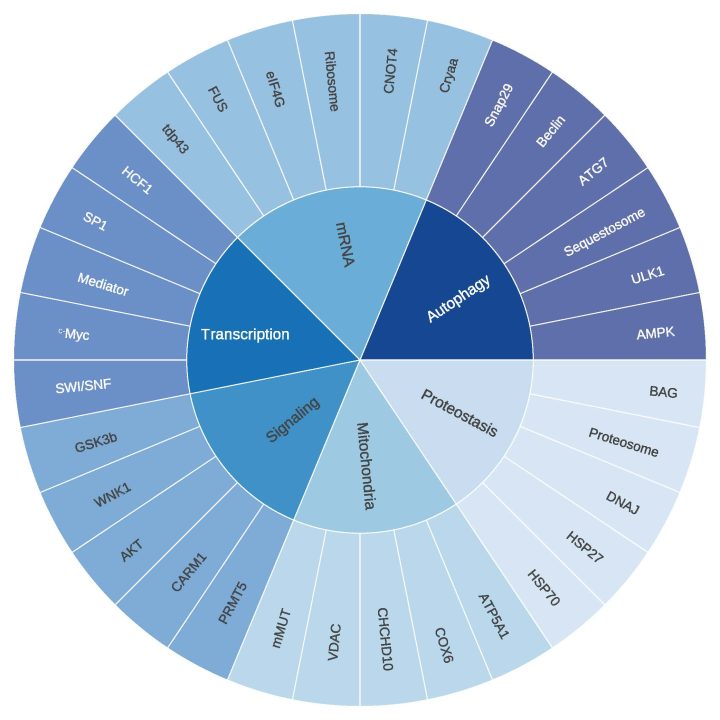
Our research has helped define the role of O-GlcNAcylation as a dynamic and adaptive post-translational modification that regulates cellular responses to stress. I demonstrated that O-GlcNAc levels rapidly increase in response to various stressors, promoting cell survival by modifying nucleocytoplasmic proteins (Zachara et al., J Biol Chem, 2004). This work laid the foundation for understanding O-GlcNAc as a protective signal in cardiomyocytes, where it enhances resistance to ischemic injury (Jones et al., Circulation, 2008). We further showed that O-GlcNAcylation regulates heat shock protein expression via GSK-3β signaling (Kazemi et al., J Biol Chem, 2010), and that stress-induced changes in the O-GlcNAc proteome affect DNA damage repair (Zhong et al., Proteomics, 2015). We have determined that there is widespread remodeling O-GlcNAc sub-proteome under heat stress (Zachara et al., Amino Acids, 2011) or oxidative stress (Lee et al., J Proteome Res, 2016). Our ongoing studies are focused on deciphering the mechanisms by which O-GlcNAc regulates AMPK and autophagy in models of oxidative stress and ischemic injury.
Select Citations
Papanicolaou KN, Jung J, Ashok D, Zhang W, Modaressanavi A, Avila E, Foster DB, Zachara NE, O’Rourke B. Inhibiting O-GlcNAcylation impacts p38 and Erk1/2 signaling and perturbs cardiomyocyte hypertrophy. J Biol Chem. 2023 Mar;299(3):102907. PMID: 36642184.
Lee A, Miller D, Henry R, Paruchuri VD, O’Meally RN, Boronina T, Cole RN, Zachara NE. Combined Antibody/Lectin Enrichment Identifies Extensive Changes in the O-GlcNAc Sub-proteome upon Oxidative Stress. J Proteome Res. 2016 Dec 2;15(12):4318-4336. PMID: 27669760.
Zhong J, Martinez M, Sengupta S, Lee A, Wu X, Chaerkady R, Chatterjee A, O’Meally RN, Cole RN, Pandey A, Zachara NE. Quantitative phosphoproteomics reveals crosstalk between phosphorylation and O-GlcNAc in the DNA damage response pathway. Proteomics. 2015 Jan;15(2-3):591-607. PMID: 25263469.
Kazemi Z, Chang H, Haserodt S, McKen C, Zachara NE. O-linked beta-N-acetylglucosamine (O-GlcNAc) regulates stress-induced heat shock protein expression in a GSK-3beta-dependent manner. J Biol Chem. 2010 Dec 10;285(50):39096-107. PMID: 20926391.
Zachara NE*, Molina H, Wong KY, Pandey A, Hart GW. The dynamic stress-induced “O-GlcNAc-ome” highlights functions for O-GlcNAc in regulating DNA damage/repair and other cellular pathways. Amino Acids. 2011 Mar;40(3):793-808. PMID: 20676906; PMCID: PMC3329784.
Jones SP, Zachara NE, Ngoh GA, Hill BG, Teshima Y, Bhatnagar A, Hart GW, Marbán E. Cardioprotection by N-acetylglucosamine linkage to cellular proteins. Circulation. 2008 Mar 4;117(9):1172-82. PMID: 18285568.